
The youth sports crisis isn’t a sports problem.
THE PROBLEM
It is a health crisis. An education crisis. A mental health crisis. A workforce-readiness crisis. A community development crisis. And it happens to show up through sports — because sports are one of the few near-universal channels through which young people develop physically, cognitively, socially, and emotionally.
When that channel breaks, the costs don't stay on the field. They show up in emergency rooms, in test scores, in mental health clinics, in classrooms where attendance is collapsing, and in communities that have lost their connective tissue.
ShareWaves exists because the system that should serve every kid physically, mentally, academically, and socially is currently serving fewer of them every year. We work on that system.
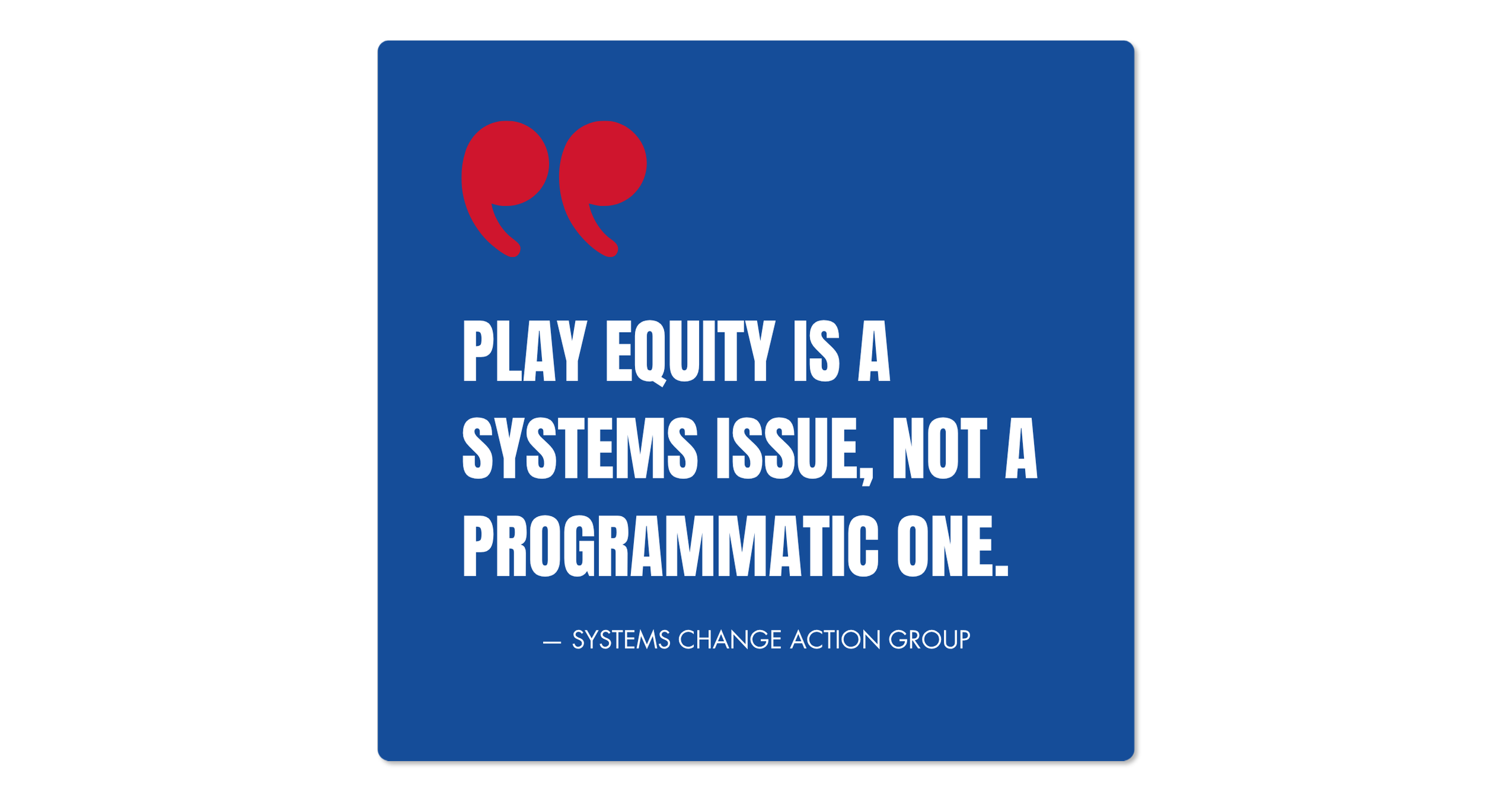
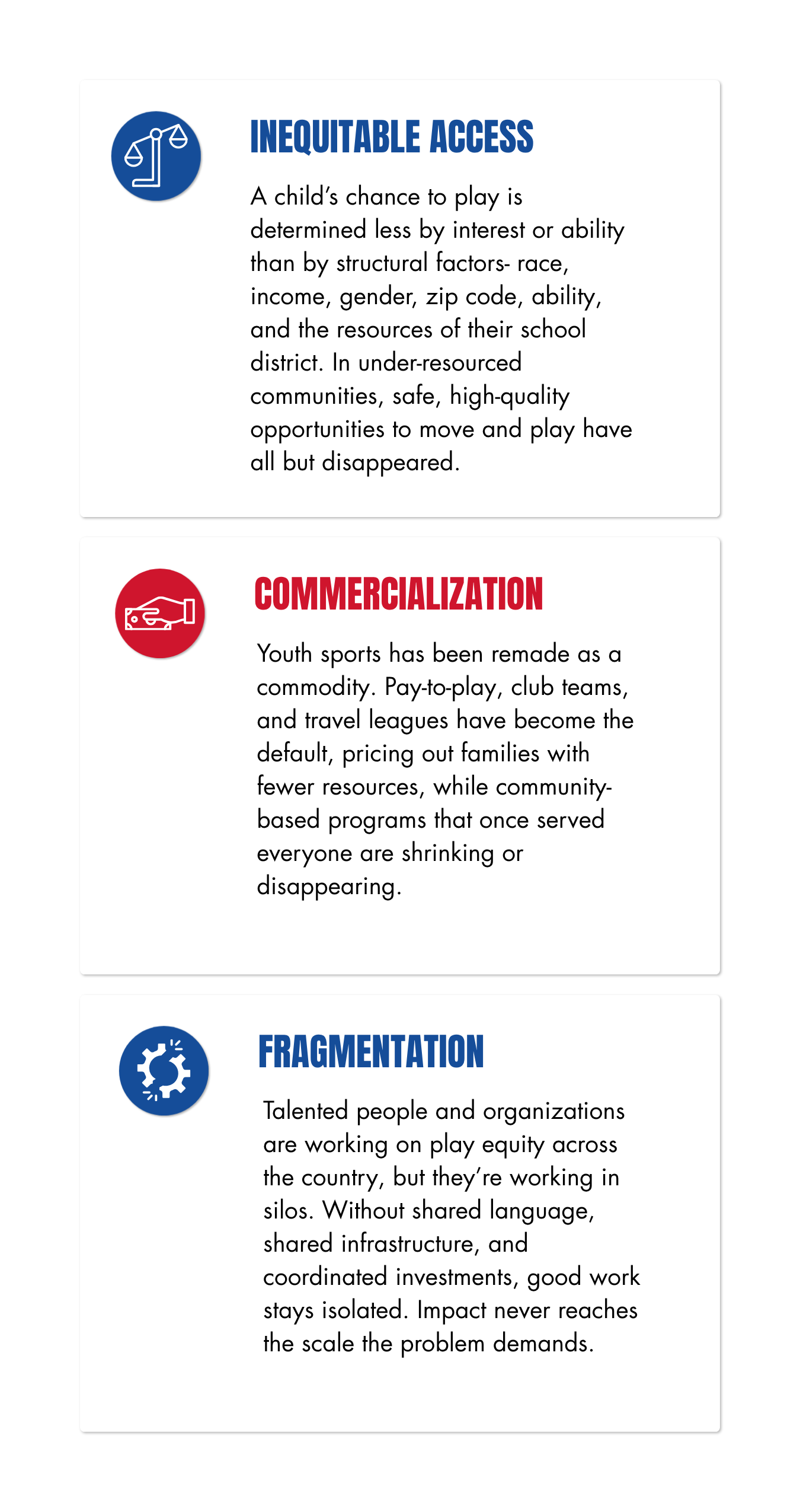
Three forces are reshaping youth sport and pushing kids out.
THE DIAGNOSIS
These are not separate problems. They are a system. And the system was designed, knowingly or not, to produce the outcomes we see now.
THE CASE
Sports aren't extracurricular. they are developmental infrastructure.
When kids move and play, they don’t just get stronger. They build the cognitive, emotional, and social architecture that carries them into adulthood — and the research now backs this at a level of rigor most interventions can’t match.
A 2026 University of Rhode Island study found that children in after-school sports showed measurable improvements in executive function, language comprehension, academic performance, social awareness, physical fitness, and mental health — and the benefits held after controlling for socioeconomic factors. That last part is what matters. The gains aren’t just because the kids who play sports also have other advantages. The sports themselves do the work.
American Enterprise Institute research found that student athletes have absenteeism rates nearly 20% lower than non-athletes — with the strongest effects for low-income, female, and non-white students. Attendance predicts educational success more than almost any other variable. Sports build the belonging and accountability that get kids to show up.
Adult outcomes follow the same pattern. Studies of women in C-suite and Fortune 500 leadership positions show that participation in youth sports is one of the most consistent shared experiences in their backgrounds — pointing toward sports as one of the most accessible leadership development environments available.
Sports simultaneously improve physical health, mental health, academic performance, school attendance, social connection, and leadership capacity. Very few interventions affect all six. This is why ShareWaves frames its work the way it does: Movement is the Medicine. Not a metaphor. A clinical, social, and developmental fact that should sit at the center of how we design schools, neighborhoods, and youth programming — and currently doesn’t.

five numbers that tell the whole story
THE EVIDENCE
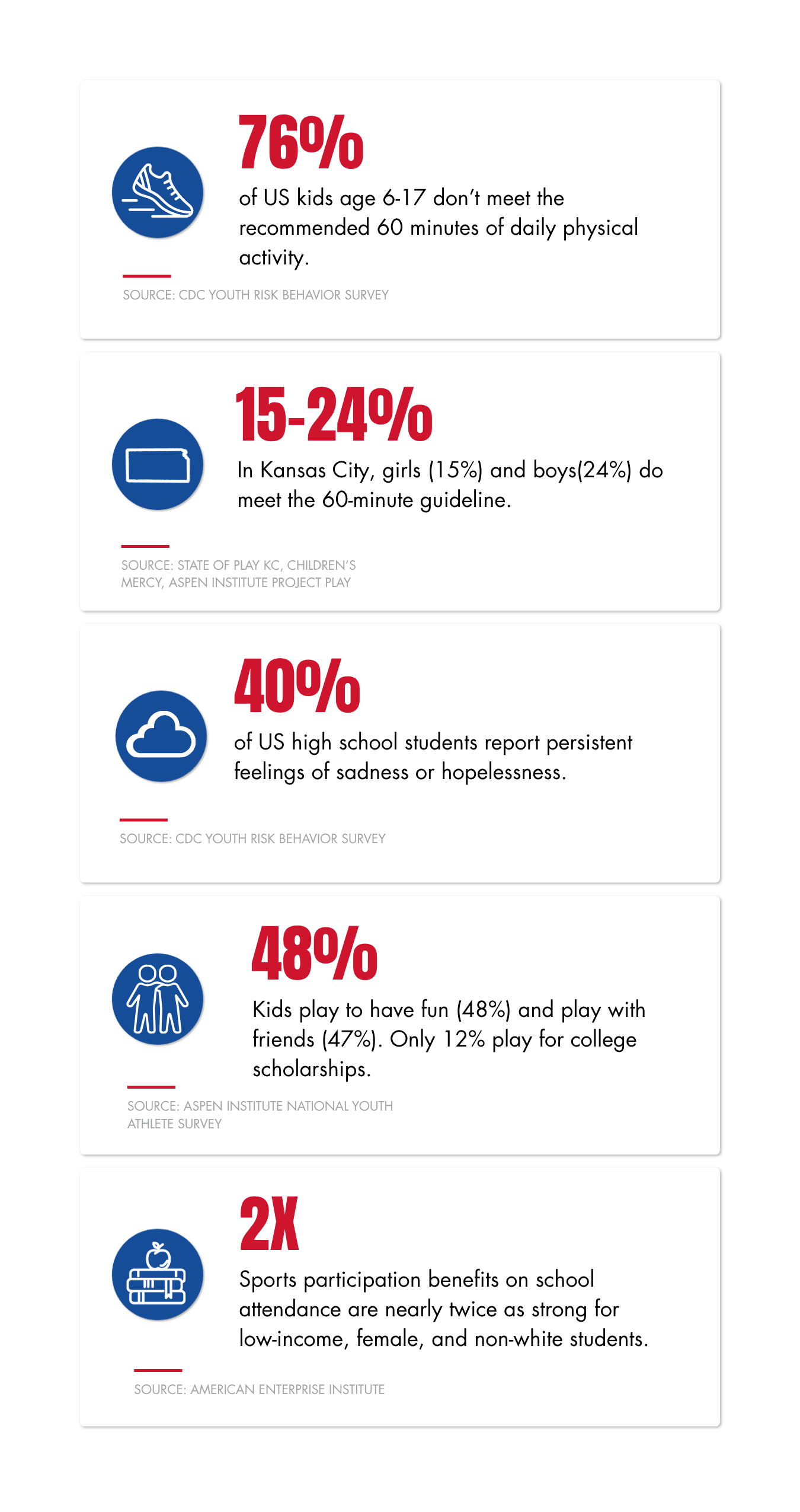
The case for sports as developmental infrastructure isn't theoretical. The data is consistent across federal public health agencies, peer-reviewed studies, and the youth themselves.
-
The Systems Change Action Group's framework for the systemic forces shaping play equity, and the language used by funders, practitioners, and policymakers across the country.
Read the framework → links to PDF
-
Promoting Physical Activity: A Peer-reviewed editorial on the role of schools as the most consistent, near-universal access point for youth movement — and what happens when that access is eroded.
Read the editorial → links to PDF
-
The three-paper series explores how shared language, coordinated action, and cultural change drive systemic shifts in youth sport.
Read the series → links to PDFs
the case for redesign
THE MISALIGNMENT
Children overwhelmingly say they play sports to have fun (48%) and be with friends (47%). Only 12% say they play for scholarships. Yet we have built a $40+ billion youth sports industry increasingly organized around exposure, specialization, and monetization.
The result is rising costs, stagnant participation, worsening physical inactivity, and growing inequities in access.
The challenge is not convincing kids that sports matter. The challenge is redesigning the system so more kids can experience the benefits we already know sports provide.

the system can change.
let’s build what works.